
Long before dinosaurs roamed the Earth, horseshoe crabs were already exploring the oceans. Today, this ancient creature plays a vital role in modern medicine — yet it now stands on the brink of extinction. This is the extraordinary story of a blue-blooded survivor quietly saving millions of lives.
The horseshoe crab (Limulus polyphemus) is not a crab as many assume. It is more closely related to spiders and scorpions, classified under the chelicerate group. With a shield-like exoskeleton, prominent eyes on either side of its head, and a long, spike-like tail, it looks like something out of a science fiction film. But in truth, it’s one of the oldest unchanged species on the planet, having existed for over 450 million years.
Yet, what makes the horseshoe crab truly remarkable lies not in its appearance, but in its blood.
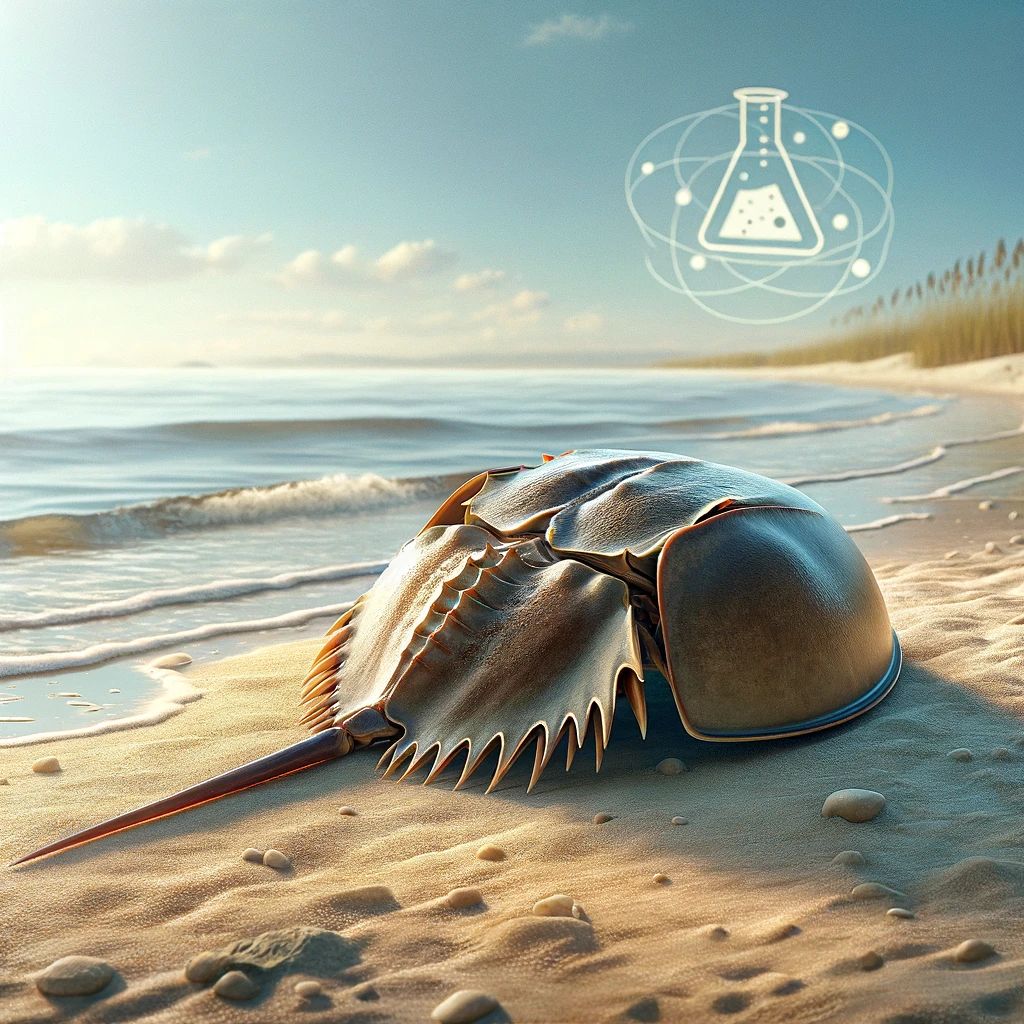
Its blood is bright blue due to the presence of haemocyanin — an oxygen-carrying molecule based on copper, unlike human haemoglobin which is iron-based. But the real wonder lies in the blood’s ability to detect even the tiniest traces of bacterial endotoxins. The horseshoe crab’s blood cells, known as Limulus Amebocyte Lysate (LAL), instantly clot when exposed to toxins, effectively halting their spread.
This unique ability has revolutionised the biomedical world. The LAL test, derived from horseshoe crab blood, is now the global standard for ensuring vaccines, medicines, and medical equipment including COVID-19 vaccines — are free from bacterial contamination. Without it, the risk of infection in modern medicine would be significantly higher.
But behind this life-saving contribution lies a crisis.
Every year, thousands of horseshoe crabs are captured to harvest their blood. While many are released afterwards, post-procedure mortality rates can reach 30% or more. On top of this, coastal development and pollution continue to disrupt their natural breeding grounds. As a result, their numbers are declining rapidly, and the International Union for Conservation of Nature (IUCN) now lists them as a threatened species.
In response, scientists have developed a synthetic alternative known as recombinant Factor C (rFC), which replicates the toxin-detecting function of LAL without relying on the actual animal. Several countries and pharmaceutical companies have begun using rFC, but LAL remains the gold standard, especially in the United States.
The story of the horseshoe crab is not just a tale of science. It’s a sobering reflection of how even the quietest creatures can play the largest roles in our survival.
It teaches us that in a world full of noise, sometimes the most silent beings hold the greatest value.
And in an era where nature is often taken for granted, perhaps it’s time we ask ourselves: do we truly appreciate the Creator’s designs — or are we simply taking without giving back?
 SERIUSBAH.COM